

Public Land Grab in Disguise? What You Need to Know About the Quiet Amendment Threatening Utah and Nevada’s Open Spaces
In a move that received almost no public attention, two members of Congress—Representatives Mark Amodei (R-NV) and Celeste Maloy (R-UT)—slipped an amendment into the House Natural Resources Committee’s Reconciliation Bill. The goal? To fast-track the disposal of federal public lands in Utah and Nevada.
Yes, you read that right.
If this amendment becomes law, it could drastically change how tens of thousands of acres of public land are managed—and not in a good way. Don’t think it affects you? Think Again! It may be public lands in NV and UT that are on the chopping block but if this passes it will set a precedence for similar actions to be taken in your state. Think it’s only a west thing? Wrong! If this happens east of the Mississippi where a wilderness area is the size of a block unit out west the loss can be of greater impact.
What Does This Amendment Actually Do?
The amendment rewrites the rules for how the Bureau of Land Management (BLM) handles federal lands. Specifically, it overrides key provisions of the Federal Land Policy and Management Act (FLPMA)—a law that’s been in place since 1976 and serves as the cornerstone of public land stewardship.
Under FLPMA, land sales must go through a thoughtful, transparent process that includes:
- Public input from local communities, Tribes, hunters, anglers, and other stakeholders
- Environmental reviews under the National Environmental Policy Act (NEPA)
- Coordination with state and local governments
- Congressional oversight for large land sales
In contrast, this amendment cuts corners by mandating the sale or transfer of certain public lands on an accelerated timeline. No real analysis. No local engagement. Just “sell it off fast.”
Why That’s a Big Problem
Once public land is sold, it’s gone forever. That means no more hunting access. No more public recreation. No more habitat protections. These lands aren’t just lines on a map—they’re the places we fish, hunt, hike, graze livestock, and connect with wild America. Once its gone it’s gone!
As stated, this amendment sets a dangerous precedent: that land can be sold off without real justification or public accountability. It removes your voice—and the voices of thousands of others who care about these places—from the process.
Follow the Money: Who Really Benefits?
Currently, when the BLM sells land, the revenue goes into the Federal Land Disposal Account (FLDA)—a fund used to purchase high-priority conservation lands and protect public access.
The new amendment guts that system. Instead of reinvesting those dollars back into public lands, the revenue would be dumped into the U.S. Treasury’s general fund, where it can be used for anything—from office furniture to unrelated government programs.
So let’s be clear: this isn’t about smart land management. It’s about converting public assets into short-term cash—with no guarantees the money will ever benefit public land, wildlife, or future access again.
The idea that this sell-off can offset real debt is not sound economics. Selling public lands doesn’t make sense economically because it sacrifices long-term public value—like recreation, tourism revenue, and natural resource management—for short-term, one-time gains that benefit only a few.
Why Hunters, Anglers, and Outdoor Enthusiasts Should Care
This isn’t just a bureaucratic squabble in D.C.—it’s a direct threat to the places we rely on. If you care about elk habitat, mule deer migration corridors, or keeping our public lands open for everyone, this should set off alarms.
Public land management should be deliberate, not rushed. It should involve the people who use and value the land. This amendment does the opposite. It removes checks and balances and eliminates the public’s role in deciding the fate of lands that belong to all of us.
Where Things Stand
Right now, this amendment has passed the House Natural Resources Committee. It hasn’t yet been voted on by the full House, and it still needs to pass the Senate. But the fact that it was introduced late at night with almost no public awareness is a clear sign: We have to pay attention and We have to have our voices heard.
This isn’t just about land in Utah and Nevada—it’s about the future of public land policy in America. If this strategy works once, it could be repeated anywhere.
Need to find common ground:
Its imperative we sit down with the stakeholders and view the situation holistically and find solutions. Yes most can agree we need more affordable housing, yes the national debt can use some help there are a number of different ways we can reconcile these issues together. Here are some reasons given by proponents of this amendment and here is what I say to them.
🔁 Argument 1: “It generates revenue for the federal government.”
Rebuttal:
Yes, selling land brings in one-time revenue, but at the cost of permanent public loss. Once land is sold, it’s gone forever—along with hunting access, grazing rights, and the possibility of future conservation. Worse, this amendment redirects that money away from public land reinvestment (like access easements or habitat acquisition) and dumps it into the general Treasury. That’s not fiscal responsibility—it’s a short-sighted liquidation of American heritage for a minimal temporary budget fix.
📉 Argument 2: “The federal government owns too much land.”
Rebuttal:
This is a political talking point, not a practical concern. Public lands are a uniquely American asset—open to all, regardless of income, background, or political affiliation. Reducing the federal estate means reducing public access and increasing fragmentation. State and private ownership often leads to gates, fences, development, or resource extraction—not long-term stewardship for the public good.
🧾 Argument 3: “The current process is slow and bureaucratic.”
Rebuttal:
It’s slow for a reason. The current system (FLPMA + NEPA) exists to ensure public land decisions are thoughtful, transparent, and inclusive. It gives time for public input, environmental review, and inter-agency coordination. Rushing land sales cuts corners that protect wildlife habitat, tribal interests, water resources, and public access. Speed shouldn’t trump stewardship.
💰 Argument 4: “Selling land stimulates local economic development.”
Rebuttal:
There are smarter, more sustainable ways to stimulate rural economies without selling public land. Outdoor recreation on public lands generates $862 billion annually and supports millions of jobs. Once those lands are sold, that economic engine often disappears. Private development may bring short-term gain, but it sacrifices long-term public benefit—especially in Western communities that rely on access to public space for tourism, ranching, outfitting, and outdoor recreation.
🌵 Argument 5: “These are ‘surplus’ or ‘low-value’ lands.”
Rebuttal:
“Low-value” to whom? What may seem surplus on a map could be vital to hunters, wildlife corridors, or watershed protection on the ground. These lands often serve as key access routes or seasonal habitat. Calling them “unused” is misleading, and bypassing local input ensures those values are never even considered. This is how important land gets sold without communities ever knowing what they’ve lost—until it’s fenced off or developed. Now selling off lands that are truly unsuitable for habitat, or lack water and or grassing value. This is a point we can meet in the middle let’s find places of value to industry that doesn’t affect access and that hold little to no value to wildlife and the people who use it.
🚨 Bottom Line:
Selling off public land under the guise of efficiency or profit is not conservative, not responsible, and not American. Our public lands are not excess inventory—they are shared resources, managed for the benefit of all, including future generations. Decisions this important require public oversight, careful review, and long-term vision—not backroom deals and fire-sale politics.
Stay Informed. Speak Up. Public Land is Not a Political Bargaining Chip.
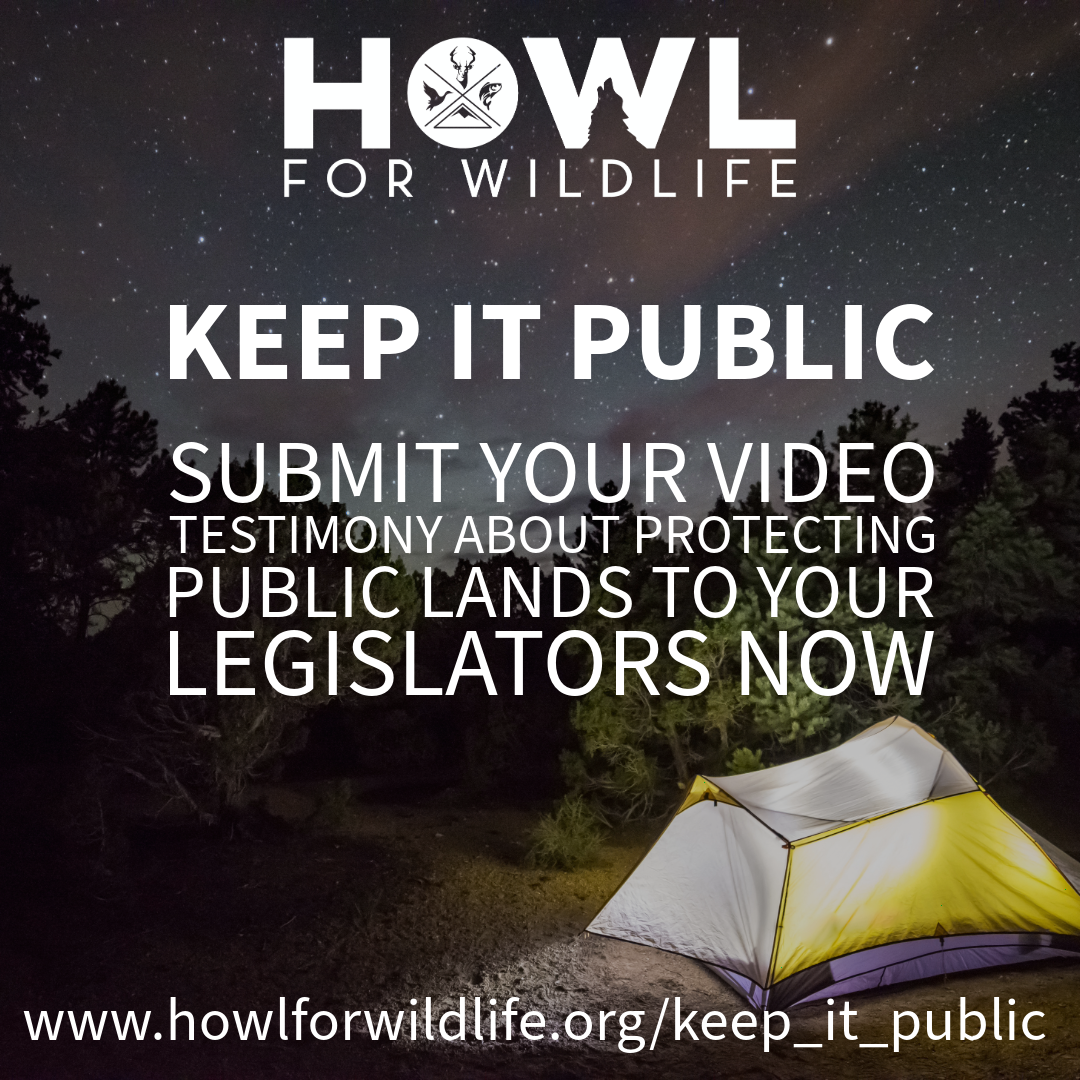
If you care about access, conservation, and the wild places that make our country special, now’s the time to make your voice heard. GET INVOLVED HERE
Discover more from John Stallone Days in The Wild
Subscribe to get the latest posts sent to your email.